Introduction
Liquid storage requirements in Haryana’s pharmaceutical, food, dairy and chemical industries demand suitable tank materials, capacity and hygienic construction. Nij Solution Pvt. Ltd. supports buyers searching for a Stainless Steel Storage Tank Supplier In Haryana with industrial tank solutions.
Understanding Storage Requirements Before Selecting an SS Tank
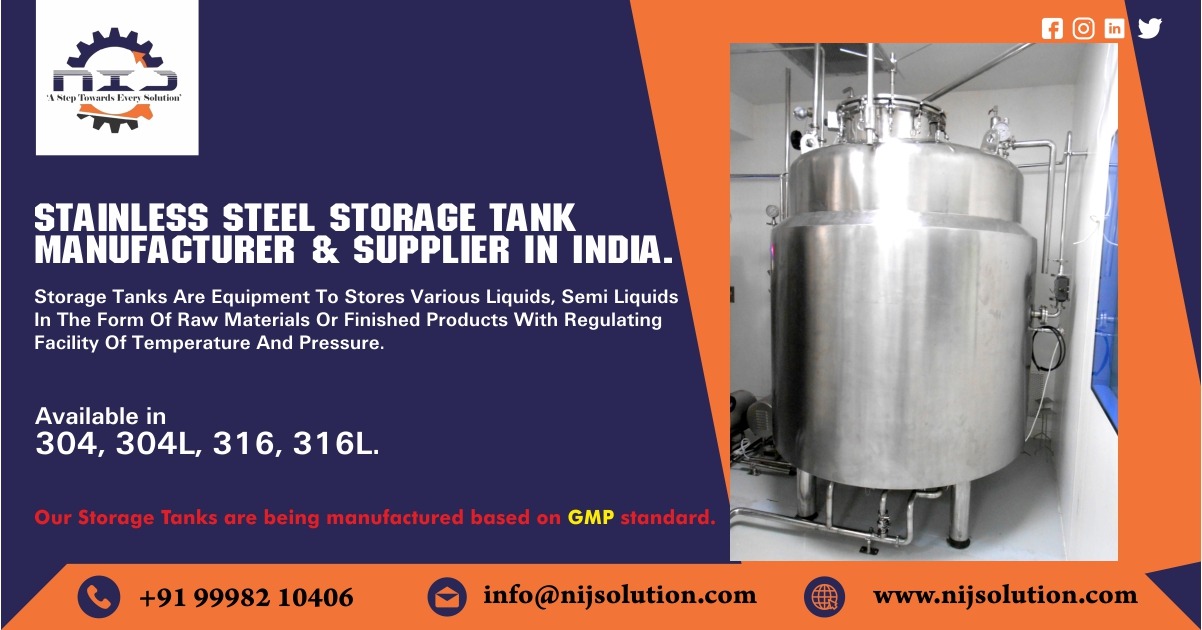
An industrial stainless steel storage tank is used to hold liquids, process water, purified water and other materials under defined operating conditions. Its design depends on the nature of the stored product and the next stage of the manufacturing process.
For example, a pharmaceutical plant may require a tank for purified water storage, while a food processing facility may need a vessel that supports regular internal cleaning.
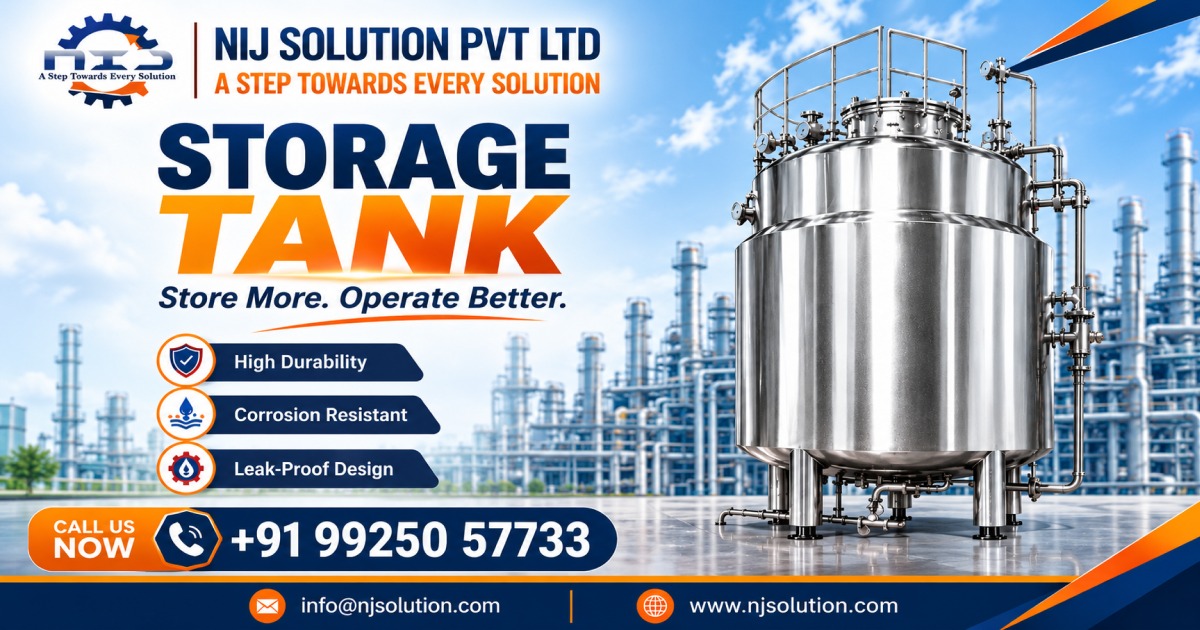
Nij Solution Pvt. Ltd. manufactures different types of storage tanks and vessels for industrial requirements.
Common configurations include:
- Holding Vessels: Used for temporary storage before material moves to another processing stage.
- Storage Tanks: Designed to store raw water, demineralized water and purified water.
- Mixing Vessels: Used when the process requires mixing or agitation.
- Pressure Vessels: Designed for applications involving specified pressure conditions.
Selecting the correct vessel category helps avoid unnecessary modifications and operational difficulties after installation.
Matching Stainless Steel Grades With the Stored Material
Material selection should be based on the chemical composition, temperature, cleaning method and contact conditions of the stored liquid.
Nij Solution’s published vessel information includes the following stainless steel grades:
- SS 304: Commonly considered for general industrial and water storage requirements.
- SS 304L: A low-carbon stainless steel grade that may be considered where welding-related corrosion concerns need attention.
- SS 316: Often evaluated for applications requiring additional corrosion resistance.
- SS 316L: A low-carbon grade considered for suitable hygienic and process applications.
The choice should not be made only on the basis of the grade name. Buyers should evaluate the actual liquid, cleaning chemicals, operating temperature and expected exposure conditions.
Before confirming an order, discuss:
- The exact material being stored.
- Its chemical properties and concentration.
- Operating and cleaning temperatures.
- Required internal surface finish.
- Compatibility with process and cleaning conditions.
A material compatibility review can help prevent premature corrosion, contamination and avoidable replacement expenses.
How Tank Capacity and Internal Design Affect Plant Operations
Tank capacity should be calculated according to actual process demand rather than the available budget alone.
An undersized vessel may interrupt production when material consumption increases. An unnecessarily large tank may occupy valuable floor space and increase the quantity of material held in storage.
Consider these factors during capacity planning:
- Daily consumption: Estimate the quantity of liquid required by the production process.
- Storage duration: Determine how long the material needs to remain inside the tank.
- Incoming supply: Consider the quantity and frequency of incoming liquid.
- Available space: Check the installation area, access routes and maintenance clearance.
- Future requirements: Account for realistic production expansion.
- Operating conditions: Confirm whether the tank requires heating, a jacket or any other process arrangement.
Nij Solution’s published vessel range includes capacities from 5 litres to 10 KL. The actual suitable capacity and configuration should be confirmed against the project requirement.
What Happens Inside a Storage Tank During Industrial Operation?
A storage vessel performs more than simple containment. Its connections, internal surfaces and supporting arrangements influence how the stored liquid enters, remains and leaves the tank.
A typical storage sequence involves the following stages:
Step 1 – Material Inlet
The liquid enters through the designated inlet connection. The inlet arrangement should match the incoming pipeline and process flow.
Step 2 – Controlled Storage
The material remains inside the vessel until the next production or distribution requirement. Level monitoring may be considered according to the plant’s control requirements.
Step 3 – Temperature Management
Where the process requires temperature control, a suitable jacket arrangement with an industrial steam or electrical heating method may be considered.
Step 4 – Material Discharge
The stored liquid moves through the designated outlet towards the next process, utility line or distribution system.
Step 5 – Cleaning and Inspection
The vessel is cleaned and inspected according to the stored material and plant cleaning procedure before the next operating cycle.
The exact arrangement depends on the tank design, process connections and the customer’s operating requirements.
Installation Planning: Points to Check Before the Tank Reaches Your Plant
Installation problems can arise when a tank is selected without considering the actual factory layout.
Before ordering, the engineering and procurement teams should review:
- Foundation: Confirm that the floor or supporting structure can accommodate the tank and its operating load.
- Available height: Check the total vessel height, including top connections and required service clearance.
- Transportation access: Verify door dimensions, internal passages and the movement route to the installation location.
- Pipeline alignment: Plan inlet, outlet, drain and other required connections.
- Electrical arrangements: Check the supply and control panel requirements if electrical heating or instrumentation is included.
- Maintenance clearance: Keep sufficient access for inspection, cleaning and servicing.
- Commissioning: Plan leak checks, connection verification and trial operation according to the approved procedure.
For larger vessels, discuss whether transportation, lifting and positioning require special arrangements. These activities should be handled by qualified personnel using an approved installation plan.
Cleaning, Inspection and Common Storage Tank Problems
A stainless steel tank still requires regular inspection and suitable cleaning. Maintenance practices should be based on the stored liquid, process conditions and supplier recommendations.
Routine attention should include:
- Checking the internal surface for deposits, stains or visible corrosion.
- Inspecting weld areas and external connections for signs of leakage.
- Checking inlet and outlet connections for blockages.
- Reviewing heating arrangements where provided.
- Inspecting supporting structures and accessible fasteners.
- Maintaining cleaning records where required by the plant’s quality system.
The following table covers some common operating observations.
| Common Issue | Possible Cause | Practical Check |
| Liquid leakage | Loose connection or damaged sealing component | Inspect accessible connections and arrange qualified assessment |
| Slow material discharge | Outlet obstruction or pipeline restriction | Review the outlet and connected pipeline |
| Unexpected temperature variation | Heating or control-related issue | Check the temperature readings and heating system |
| Deposits on internal surfaces | Inadequate cleaning or material accumulation | Review the cleaning procedure and inspect the tank |
| Visible surface corrosion | Material or chemical compatibility concern | Review the stored liquid and obtain a technical inspection |
Do not attempt repairs on pressurized or heated vessels without proper isolation and qualified technical supervision.
Quality Checks Buyers Should Complete Before Confirming an Order
A purchase decision should include technical verification, not just a comparison of tank prices.
Use this checklist when evaluating a Stainless Steel Storage Tank Supplier In Haryana:
- Confirm the stainless steel grade and material of construction.
- Verify the required working and total capacity.
- Review tank dimensions and available installation space.
- Check the internal surface finish requirement.
- Confirm whether the tank needs a jacket or heating arrangement.
- Review the inlet, outlet, drain and other process connections.
- Clarify whether the vessel is intended for atmospheric or pressure service.
- Discuss fabrication details, weld inspection and applicable testing.
- Request relevant material and inspection documentation.
- Confirm delivery scope, installation coordination and service responsibilities.
For pharmaceutical and hygienic applications, also review the cleaning arrangement, product-contact surfaces and suitability for the plant’s cleaning procedures.
Nij Solution’s published vessel specifications mention an internal surface finish of up to 0.4 µRA. Buyers should confirm the required finish, measurement method and acceptance criteria for their particular project before placing an order.
Industrial Tank Planning With Nij Solution Pvt. Ltd.
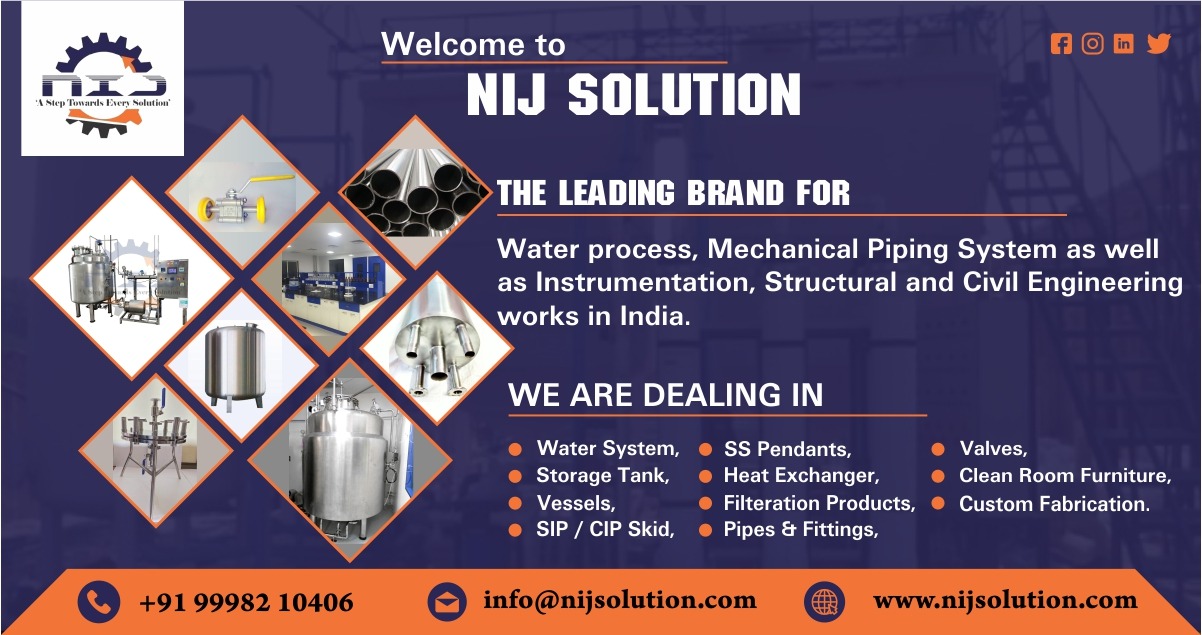
Nij Solution Pvt. Ltd. works in industrial water management, storage tanks, vessels, process piping and related engineering requirements.
The company manufactures storage tanks and vessels for raw water, demineralized water and purified water storage, with configurations considered according to customer requirements.
Its published product information includes:
- Stainless steel grades SS 304, 304L, 316 and 316L.
- Storage tank designs with or without jacket arrangements.
- Industrial steam and electrical heating options.
- Holding, pressure and mixing vessel categories.
- Capacities ranging from 5 litres to 10 KL.
With manufacturing support from Ahmedabad, Gujarat, India, Nij Solution can discuss tank requirements with industrial buyers in Haryana and other regions.
Visit www.nijsolution.com to explore the company’s industrial engineering and vessel solutions.
Services
- Tank Requirement Consultation: Understanding storage capacity, material compatibility and process conditions.
- Vessel Configuration Planning: Discussing suitable vessel types, material grades and heating arrangements.
- Industrial Tank Manufacturing: Fabricating storage tanks and vessels according to agreed project requirements.
- Engineering and Technical Coordination: Discussing process connections, piping integration and related technical requirements.
Location
Haryana has several manufacturing and industrial centres where stainless steel storage vessels support water management, pharmaceutical production, food processing, dairy operations and chemical handling. Nij Solution Pvt. Ltd. provides manufacturing support from Ahmedabad, Gujarat, India, for buyers across Gurugram, Faridabad, Manesar, Bawal, Dharuhera, Rewari, Rohtak, Sonipat, Kundli, Rai, Panipat, Karnal, Ambala, Yamunanagar, Panchkula, Hisar, Jind, Bahadurgarh, Jhajjar, Palwal, Narnaul, Kaithal, Kurukshetra, Sirsa and Barhi.
Frequently Asked Questions
Q: Which stainless steel grade should be selected for an industrial storage tank?
A: SS 304, 304L, 316 and 316L are possible material options. The correct grade depends on the stored liquid, chemical exposure, temperature and cleaning conditions.
Q: What tank capacity is available from Nij Solution Pvt. Ltd.?
A: The company’s published vessel range covers capacities from 5 litres to 10 KL. Buyers should confirm the required capacity and configuration during technical discussions.
Q: Can a stainless steel storage tank include a heating arrangement?
A: Yes. Nij Solution’s published vessel information includes jacket arrangements with industrial steam and/or electrical heating options, depending on the required configuration.
Q: What information should be shared when requesting a tank quotation for Haryana?
A: Share the liquid type, required capacity, stainless steel grade, operating temperature, pressure conditions, installation dimensions and connection requirements. This helps establish a suitable technical specification.
Conclusion
Industrial storage requirements in Haryana call for careful consideration of material compatibility, vessel capacity, surface finish and installation conditions. Buyers comparing suppliers should verify technical specifications before ordering. Nij Solution Pvt. Ltd. provides manufacturing support from Ahmedabad, Gujarat, India, for industrial tank and vessel requirements.
Planning an industrial storage tank requirement in Haryana? Contact Nij Solution Pvt. Ltd. to discuss your capacity, material, heating and vessel configuration requirements and receive relevant technical guidance.
Call Us:
+91 99250 57733
+91 99982 10406
+91 76985 37842
079-29611075
Email: info@nijsolution.com