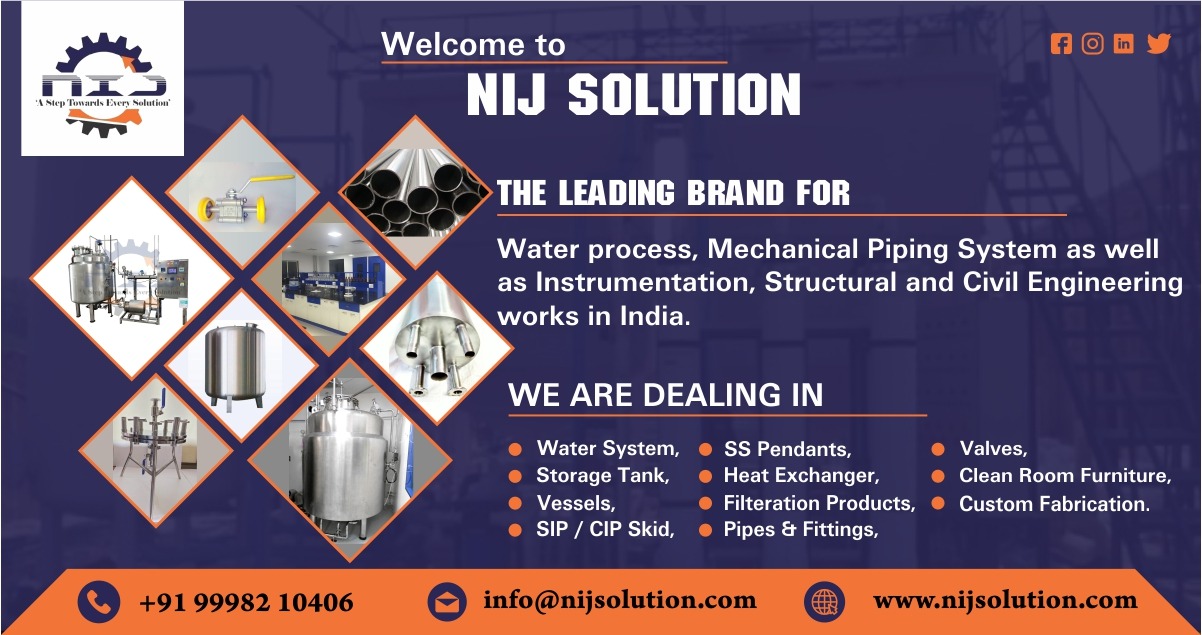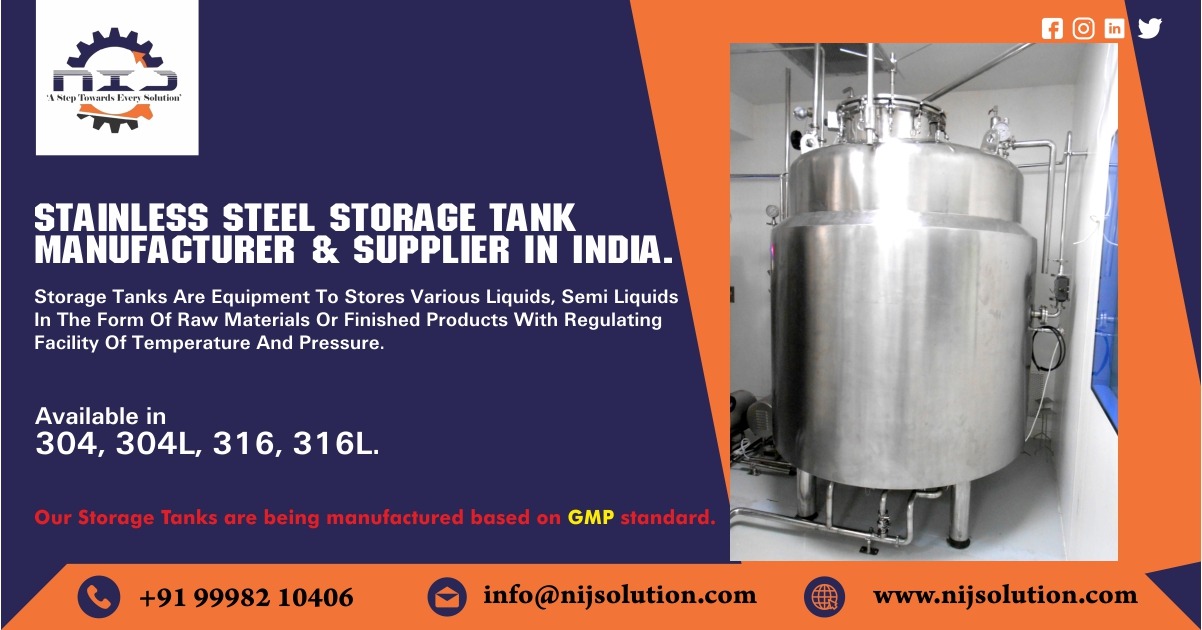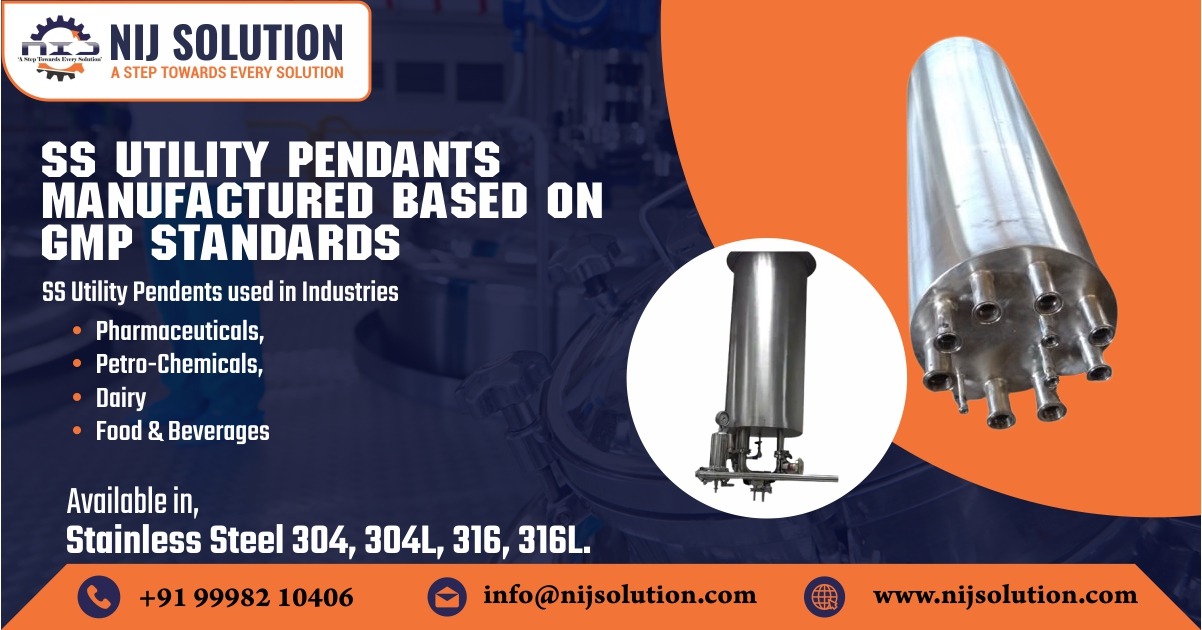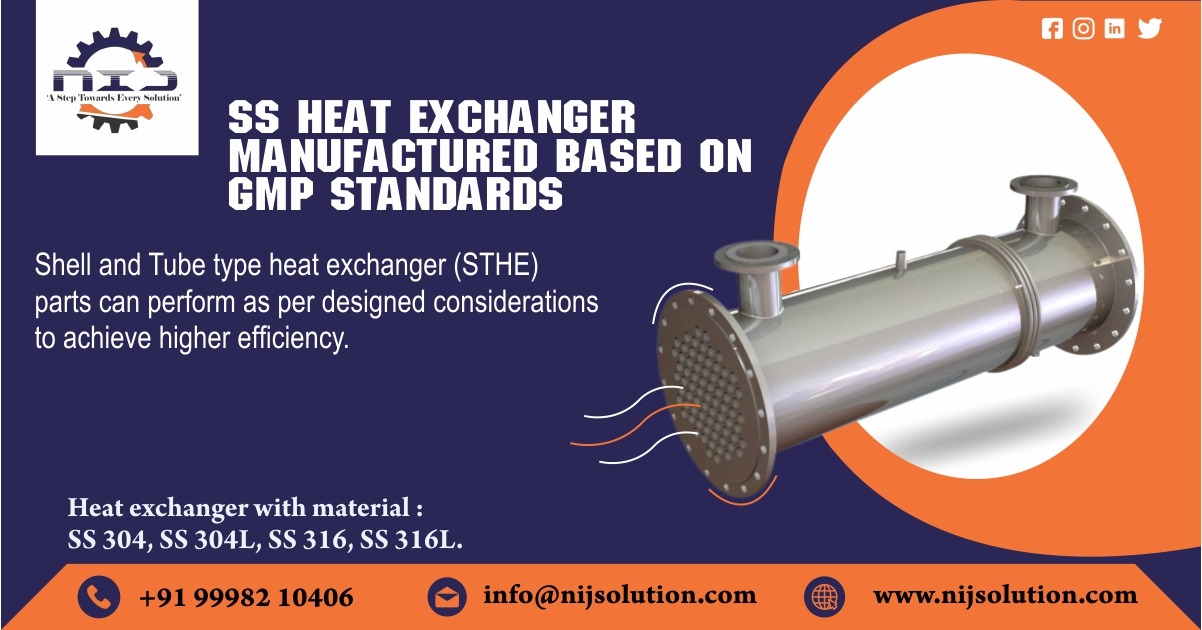
When cleaning validation, product hygiene, and equipment availability affect production, CIP and SIP systems help industrial plants manage cleaning and sterilization requirements. Nij Solution Pvt. Ltd. provides manufacturing support from Ahmedabad, Gujarat, India, for buyers evaluating process system requirements in Chhattisgarh.
Understanding CIP and SIP in Industrial Processing
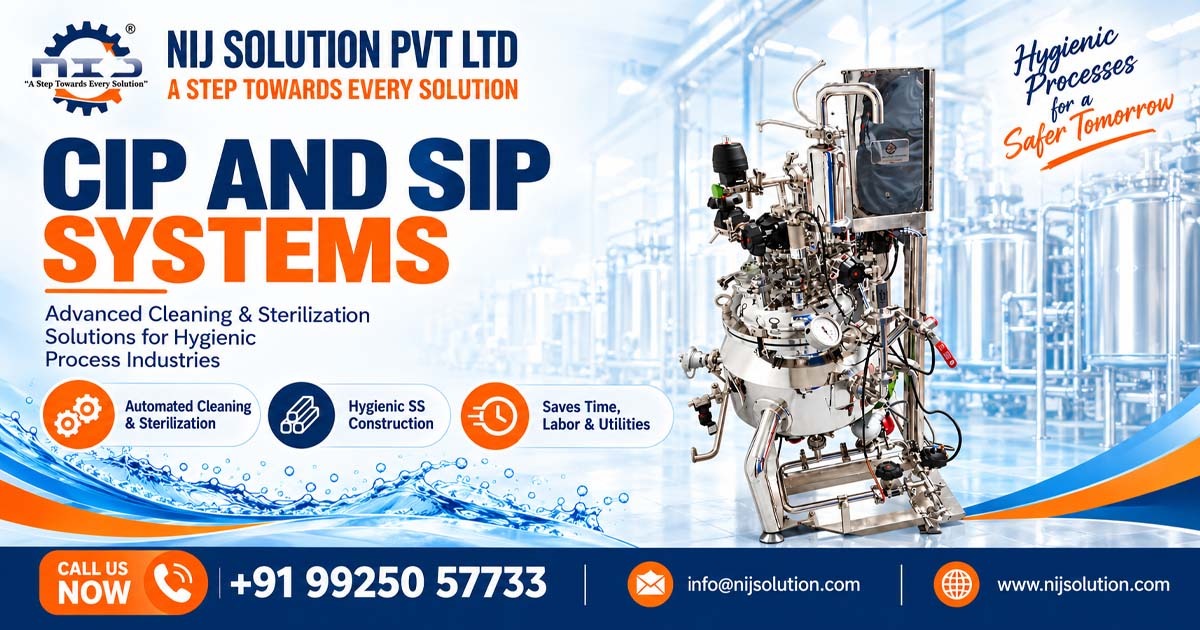
CIP (Cleaning-in-Place) cleans internal surfaces of tanks, pipelines, and process equipment without requiring complete dismantling. SIP (Sterilization-in-Place) uses a validated sterilization process, commonly involving steam where the equipment and process permit, to reduce microbial contamination risks.
These systems serve different purposes and may be integrated into a production line depending on its hygiene requirements.
– CIP: Removes product residues, deposits, and other process-related contamination through a defined cleaning cycle.
– SIP: Supports sterilization of compatible equipment and product-contact pathways under specified operating conditions.
– Combined systems: Coordinate cleaning and sterilization sequences where the process design requires both.
Which Production Problems Can These Systems Address?
Manual cleaning and disconnected sterilization procedures can create operational challenges in plants handling sensitive products.
Common concerns include:
– Residual product remaining inside pipelines or vessels.
– Inconsistent cleaning procedures between production batches.
– Excessive equipment dismantling for routine cleaning.
– Delays caused by cleaning and preparation activities.
– Difficulty documenting process parameters and verifying cleaning results.
A properly designed system can make cleaning procedures more repeatable. However, its effectiveness depends on equipment design, the selected cleaning process, operating parameters, and suitable validation.
Selecting a System Around Your Process Requirements
For buyers searching for a CIP and SIP Systems Supplier In Chhattisgarh, the first step is to define the equipment and hygiene requirements rather than selecting a system by price alone.
Evaluate these points before requesting a quotation:
– Equipment coverage: Identify every tank, pipeline, vessel, and product-contact component that requires cleaning or sterilization.
– Production requirements: Consider batch frequency, product changeovers, cleaning time, and the required operating sequence.
– Material compatibility: Check whether wetted materials, seals, gaskets, and instruments are compatible with the proposed chemicals, temperatures, and process conditions.
– Utility availability: Confirm the availability and suitability of water, cleaning chemicals, heating arrangements, steam where applicable, drainage, and electrical supply.
These details help suppliers understand the actual process before recommending a configuration.
How Cleaning and Sterilization Cycles Are Planned
The exact sequence varies by equipment design, product residues, and the required hygiene outcome. A typical planning sequence may include the following stages.
1. Process assessment: Identify the equipment to be cleaned and define the required cleaning or sterilization outcome.
2. Cleaning preparation: Select compatible cleaning media and establish suitable flow, temperature, concentration, and contact-time requirements.
3. Cleaning cycle: Circulate or distribute the cleaning medium through the intended equipment pathways according to the approved procedure.
4. Rinsing and verification: Remove cleaning residues where required and verify the cleaning outcome using appropriate acceptance criteria.
5. Sterilization cycle: Where SIP is required, apply the specified sterilization process and verify the necessary process conditions.
6. Release for production: Confirm that the applicable cycle requirements are met before returning the equipment to service.
Cleaning verification and sterilization validation are distinct activities.
Installation Planning for Plants in Chhattisgarh
Installation planning should begin before equipment delivery. This helps prevent layout changes, utility conflicts, and commissioning delays.
The project team should review:
– Equipment positioning and access for inspection.
– Pipeline routing, drainability, and avoidance of unintended liquid retention.
– Utility connections and the required operating conditions.
– Safe access to valves, instruments, pumps, and control panels.
– Compatibility with existing production equipment and control systems.
– Commissioning procedures, operator training, and required documentation.
Maintenance Checks and Troubleshooting Guidance
Routine inspection helps identify issues before they interrupt production. Maintenance procedures and service intervals should follow the equipment manufacturer’s recommendations.
| Common Issue | Possible Cause | Practical Check |
| Cleaning results vary | Incorrect process parameters or uneven distribution | Review cycle records and the cleaning procedure |
| Poor liquid circulation | Flow restriction or pump-related issue | Check available flow indications and arrange inspection |
| Cleaning residue remains | Inadequate rinsing or unsuitable cleaning conditions | Review rinse requirements and verification results |
| Sterilization cycle fails acceptance criteria | Required conditions were not achieved throughout the intended pathway | Review recorded parameters and follow the approved deviation procedure |
| Repeated leakage | Seal wear or material incompatibility | Arrange inspection by qualified maintenance personnel |
Quality Checks Before Approving a Supplier
A supplier evaluation should cover both the equipment and its suitability for the intended production process.
Use this checklist during technical discussions:
– Confirm the proposed equipment scope and process coverage.
– Review contact-material specifications and compatibility with cleaning media.
– Verify pipeline layout, drainage arrangements, and accessibility.
– Clarify instrumentation, control functions, and cycle-recording requirements.
– Ask how cleaning verification and SIP validation requirements will be addressed.
– Confirm the availability of operating manuals, drawings, and maintenance documentation.
– Discuss commissioning responsibilities, operator training, spare parts, and technical support.
For regulated manufacturing, align the design and documentation requirements with the applicable industry regulations and the plant’s quality procedures. Do not assume that a standard equipment configuration automatically satisfies every regulatory or validation requirement.
Services
– Requirement assessment and consultation for CIP and SIP process systems.
– Equipment selection and process-layout planning.
– Installation and commissioning coordination, subject to the agreed project scope.
– Technical guidance and after-sales support, as agreed with the supplier.
Location
Industrial facilities in Chhattisgarh may require process cleaning and sterilization arrangements suited to their production operations. Relevant commercial and industrial locations include Raipur, Bhilai, Durg, Korba, Bilaspur, Raigarh, Dhamtari, Rajnandgaon, Jagdalpur, Ambikapur, Champa, Janjgir, Tilda, Bemetara, Kawardha, Mahasamund, Baloda Bazar, Kanker, Dantewada, Manendragarh, Baikunthpur, Bhilai Industrial Area, Urla Industrial Area, Siltara Industrial Area, and Sirgitti Industrial Area.
Planning Your CIP and SIP Requirement With Nij Solution Pvt. Ltd.
Nij Solution Pvt. Ltd. offers manufacturing support from Ahmedabad, Gujarat, India. Buyers in Chhattisgarh can discuss their process requirements, equipment coverage, installation conditions, and technical expectations before proceeding with a project.
Visit nijsolution.com to learn more about the company and initiate a discussion about your requirements. Confirm the available system configurations, project scope, and support arrangements directly with the company.
Frequently Asked Questions
Q: What is the main difference between CIP and SIP systems?
A: CIP cleans internal equipment surfaces without complete dismantling. SIP applies a defined sterilization process to compatible equipment and pathways when required by the production process.
Q: How can a plant determine the right CIP system capacity?
A: Capacity depends on the equipment volume, pipeline dimensions, required flow conditions, cleaning sequence, and the number of circuits operating together. A process assessment helps establish the appropriate design basis.
Q: Can CIP and SIP systems be integrated with existing production equipment?
A: Integration may be possible after reviewing pipeline layouts, materials, utilities, control interfaces, and process requirements. A technical assessment is necessary before confirming compatibility.
Q: What should buyers in Chhattisgarh discuss before placing an order?
A: Share equipment drawings, process details, hygiene requirements, utility availability, and site conditions. Also clarify documentation, commissioning responsibilities, maintenance arrangements, and technical support.
Conclusion
CIP and SIP systems help industrial plants manage equipment cleaning and sterilization through defined, verifiable processes. Buyers in Chhattisgarh should prioritize process compatibility, hygienic design, validation requirements, and maintainability. Nij Solution Pvt. Ltd., with manufacturing support from Ahmedabad, Gujarat, India, can be contacted to discuss project requirements and equipment suitability.
Contact Nij Solution Pvt. Ltd. to discuss your CIP and SIP requirements, review process and installation considerations, and seek guidance for planning your industrial project in Chhattisgarh.
Call Us:
+91 99250 57733
+91 99982 10406
+91 76985 37842
079-29611075
Email: info@nijsolution.com