Introduction
How can an electrical vent housing support equipment cooling without compromising protection? Buyers in Telangana should evaluate airflow requirements, environmental exposure, and enclosure compatibility before selecting a supplier for industrial electrical installations.
1. Why Airflow and Protection Must Be Evaluated Together
Electrical vent housing is used in enclosure designs where ventilation and protection must be considered together. The vent arrangement can influence how air moves through a housing, while the opening design affects exposure to dust, moisture, and other contaminants.
A suitable configuration depends on the equipment installed, the heat it generates, and the surrounding operating environment. Buyers should avoid assuming that every ventilated housing provides the same level of protection.
For industrial projects in Telangana, the first step is to define the operating conditions rather than choosing a housing based on appearance or dimensions alone.
2. What Determines the Right Vent Housing Configuration?
The correct configuration depends on the intended installation and electrical system requirements.
– Airflow requirement: Identify whether natural ventilation is sufficient or additional cooling is needed.
– Environmental exposure: Assess dust, humidity, rain, chemical vapours, and cleaning practices.
– Mounting arrangement: Confirm the available space, mounting orientation, and access needed for inspection.
– Material compatibility: Select a suitable material according to corrosion risks, surrounding conditions, and project requirements.
– Maintenance access: Ensure the vent area can be inspected and cleaned without creating unnecessary difficulties for maintenance personnel.
These details help procurement teams prepare a clearer technical enquiry for an Electrical Vent Housing Supplier In Telangana.
3. How Vent Openings Affect Enclosure Performance
Ventilation is not simply a matter of making openings in a metal housing. The size, position, and arrangement of openings influence air movement and the level of environmental protection.
Three points deserve particular attention:
– Opening placement: Air should have a suitable path through the enclosure, based on the internal layout and cooling arrangement.
– Contamination risk: Dust and moisture may enter through ventilation openings. Screens, filters, or other protective arrangements should be evaluated according to site conditions.
– Heat generation: Components that produce substantial heat may require a separate thermal-management assessment rather than relying on passive ventilation alone.
A useful technical distinction is that ventilation and ingress protection are related but different requirements. Buyers should confirm the required enclosure protection level for the complete assembly, including its vents, seals, cable entries, and other openings.
4. What Should Procurement Teams Verify in a Quotation?
A quotation becomes easier to evaluate when it describes the intended application instead of simply naming the product.
Ask the supplier to clarify:
– Housing dimensions, drawings, and mounting details.
– Material grade and surface finish, where applicable.
– Vent opening dimensions and protective arrangements.
– Required ingress protection rating, if applicable to the assembly.
– Quantity, inspection requirements, delivery schedule, and documentation.
– Compatibility with the existing electrical panel or equipment.
If two quotations differ significantly in price, compare the construction details and scope of supply before deciding. A lower price may reflect a different material, finish, design, or level of protection.
5. A Practical Example: Housing for a Dusty Production Area
Consider a hypothetical manufacturing plant in Telangana installing an electrical control panel beside a material-handling line.
The maintenance team wants ventilation to manage internal heat, but the surrounding area contains airborne dust. Selecting a housing only by its dimensions could leave the panel exposed to contamination.
A better approach is to establish the heat load, determine the site’s dust exposure, and evaluate an appropriate vent and filtration arrangement. The engineering team should then confirm that the complete assembly meets its protection requirements without restricting necessary cooling.
This approach makes the purchase decision more closely aligned with actual operating conditions.
6. Buyer Checklist Before Placing an Order
Use these checks when contacting an Electrical Vent Housing Supplier In Telangana.
- Share the electrical panel drawing and required housing dimensions.
- Describe ambient temperature, dust, humidity, and outdoor exposure.
- Specify the cooling requirement and estimated internal heat load.
- Confirm material, finish, mounting method, and vent configuration.
- Request drawings and clarification of the required protection level.
- Agree on inspection, delivery, and maintenance-related requirements.
Completing these checks helps reduce misunderstandings between the procurement team, electrical designer, and supplier.
7. Sourcing Electrical Vent Housing for Telangana’s Industrial Projects
Telangana has industrial clusters supporting pharmaceuticals, engineering, food processing, electronics, and other manufacturing activities. Buyers should align housing requirements with the operating environment and project specifications of their particular facility.
For procurement teams comparing an Electrical Vent Housing Supplier In Telangana, practical considerations include drawing approval, transport coordination, material suitability, inspection arrangements, and delivery scheduling.
Relevant industrial locations include Hyderabad, Secunderabad, Medchal, Jeedimetla, Balanagar, Cherlapally, Nacharam, Patancheru, Pashamylaram, Bollaram, Sangareddy, Zaheerabad, Shamirpet, Maheshwaram, Shamshabad, Kothur, Warangal, Karimnagar, Nizamabad, Khammam, Ramagundam, Siddipet, Nalgonda, Jadcherla, and Miryalaguda.
These locations are potential areas of industrial demand, not a confirmation of company service coverage.
8. Nij Solution Pvt. Ltd. and Its Manufacturing Support
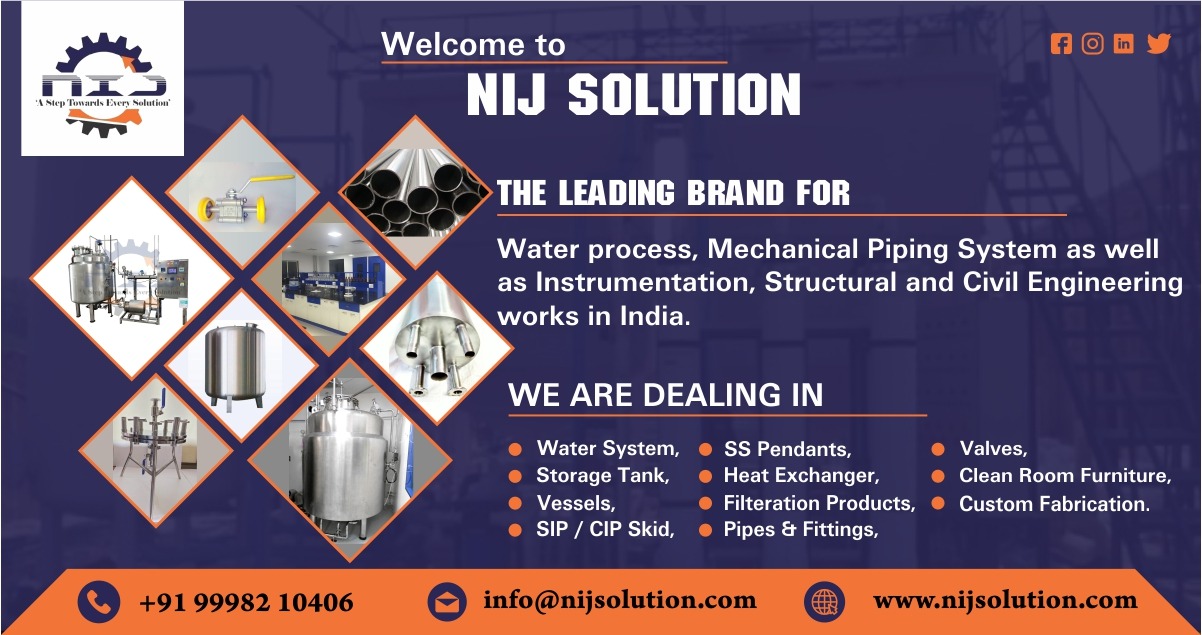
Nij Solution Pvt. Ltd. is an engineering company based in Ahmedabad, Gujarat, India. Its website describes work involving industrial water systems, storage tanks and vessels, process piping, filtration products, and custom fabrication.
For electrical vent housing requirements, buyers can visit nijsolution.com to discuss their application and clarify whether the required product, fabrication scope, and technical documentation can be accommodated.
Manufacturing support is provided from Ahmedabad, Gujarat, India, as specified for this project. Product-specific capabilities and delivery arrangements should be confirmed directly before placing an order.
9. Four Service and Support Points to Discuss
The following are practical topics to clarify with the company; they are not a confirmation that every service is currently offered for electrical vent housing.
1. Requirement assessment: Discuss the intended application, operating conditions, and required dimensions.
2. Technical coordination: Clarify drawings, mounting details, and compatibility requirements.
3. Fabrication scope: Confirm whether the requested housing design and material can be accommodated.
4. Quality documentation: Ask which inspection records, material details, and product documents can be supplied.
10. Frequently Asked Questions
Q1. How do I select an electrical vent housing for a dusty plant?
Evaluate the dust exposure, required airflow, internal heat load, and enclosure protection requirements. Confirm whether suitable filters or protective screens are needed.
Q2. Can electrical vent housing be customised for an existing control panel?
Customisation may be possible depending on the design and supplier’s capabilities. Share the panel drawing, dimensions, mounting details, and required openings for technical evaluation.
Q3. Does adding a vent affect the enclosure’s IP rating?
It can. Vent openings, filters, seals, and other components influence the protection of the complete enclosure. Confirm the required rating and supporting documentation for the finished assembly.
Q4. What affects the price of electrical vent housing?
Price can depend on material, dimensions, fabrication complexity, vent design, surface finish, quantity, and documentation requirements. A detailed technical enquiry helps suppliers prepare a more comparable quotation.
11. Conclusion
Selecting electrical vent housing requires more than matching dimensions to an electrical panel. Buyers should balance airflow, environmental protection, material suitability, and maintenance access before approving a design. Clear drawings and operating details help suppliers evaluate requirements and reduce avoidable procurement and installation issues.
Contact Nij Solution Pvt. Ltd. through nijsolution.com to discuss your electrical vent housing requirements, confirm product suitability, and request relevant technical details.
Call Us:
+91 99250 57733
+91 99982 10406
+91 76985 37842
079-29611075
Email: info@nijsolution.com